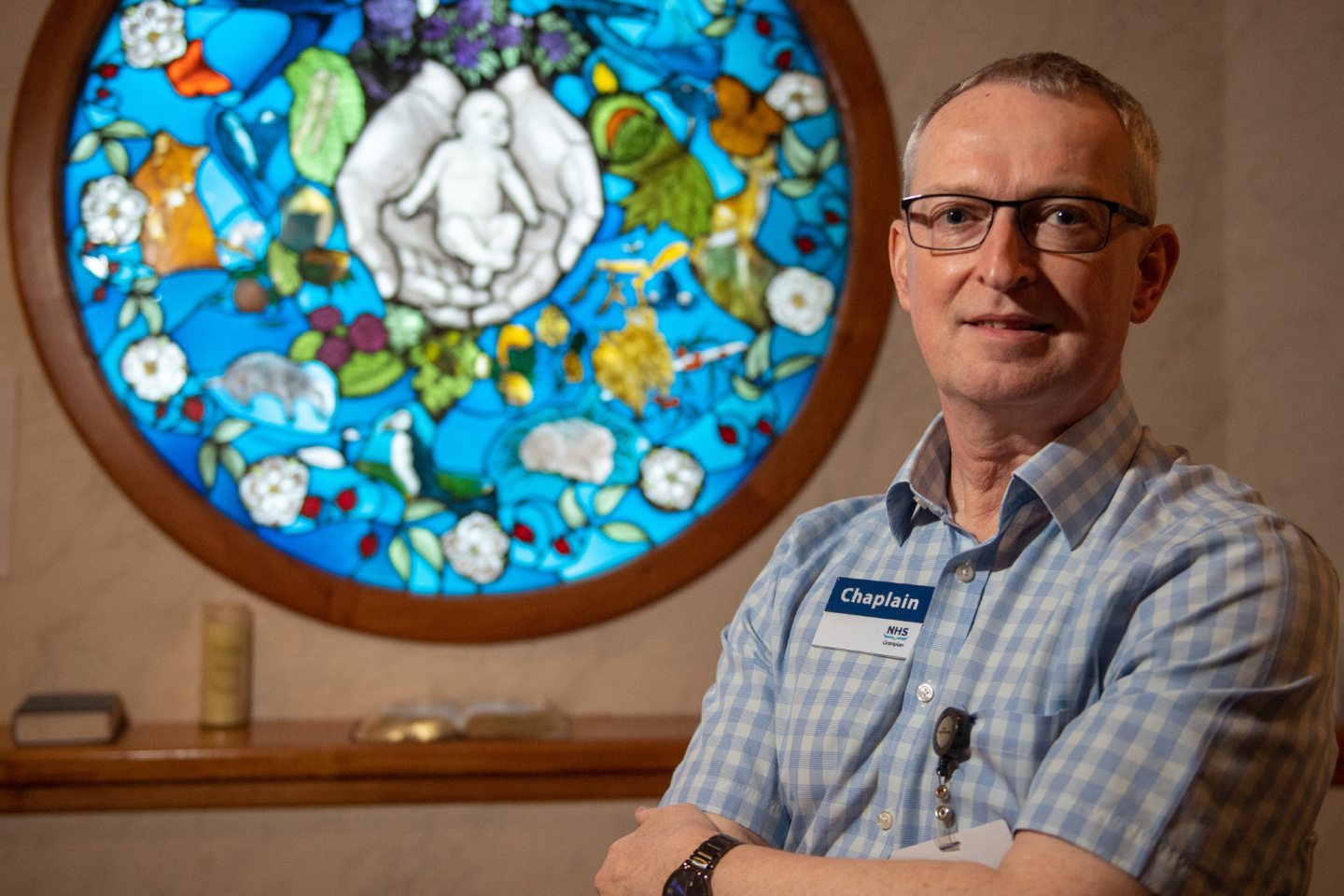
Rev Jarod Meenan, Healthcare Chaplain for NHS Grampian, shares with us how transformation can and does occur as encounters with God have physical, social, mental and spiritual impacts!
“I have been a Baptist Minister for over 28 years now, 22 in pastoral ministry and now in my seventh year in healthcare chaplaincy with NHS Grampian. I am chaplain to Aberdeen Maternity Hospital, Aberdeen’s Health Village where I provide a listening service for patients and staff most Wednesday mornings, and also the Emergency Care Centre in Aberdeen Royal Infirmary (ARI). As part of a team of 11 chaplains, I seek to promote spiritual care to patients, relatives and staff.
What is Spiritual Care within the NHS?
The answer to this is widely regarded as being very difficult to define.
NHS Grampian’s Spiritual Care Policy defines commitment to Spiritual Care this way.

“NHS Grampian is committed to providing holistic healthcare which is responsive to the physical, psychological, emotional and spiritual needs of its patients. Appropriate spiritual, pastoral and religious care will be offered to patients, their relatives and carers and to staff. This care is available to people with or without specified religious beliefs.”
[NHS Grampian Spiritual Care Policy (2019).]
Thinking of the policy’s focus on holistic care, this has Biblical encouragement as we will see from the opening words of the Apostle John’s third epistle:
3 John: 1-2: “The elder, to my dear friend Gaius, whom I love in the truth. Dear friend, I pray that you may enjoy good health and that all may go well with you, just as you are progressing spiritually.”
There are many different answers that could very reasonably be given regarding the nature of spiritual care however, in the context of healthcare, it relates to caring for the whole person and paying attention to one’s purpose, values and sense of meaning. And when I think of my own purpose, values and meaning the following biblical encouragement is a very high priority:
Colossians 3:17 – “And whatever you do, whether in word or deed, do it all in the name of the Lord Jesus, giving thanks to God the Father through him.”
The care I seek to give is in Jesus’ name, that is, based on His perfect example. I know I will not be satisfied if I don’t seek to follow Jesus’ example in my daily life. And following Jesus’ example, I believe, works very well in the context of person-centred care in the NHS where there are opportunities to care holistically for others in need.
So, what did Jesus do?
At this juncture, it’s important to look at our Lord’s own example in how He related to others. Of course, Jesus gave commands that are to be followed by all His followers, however He met people at the point of their own personal need. In so doing, he would ask questions to help the person acknowledge what they really needed.
In His encounter with Bartimaeus (Mark 10: 46-52), Jesus knew that the man was blind, but yet we hear the following: ‘What do you want me to do for you?’ Jesus asked him. The blind man said, ‘Rabbi, I want to see.’
In Jesus’ journey with the two men on the road to Emmaus (Luke 24: 13-35), Jesus asked them, ‘What are you discussing together as you walk along?’ They stood still, their faces downcast. One of them, named Cleopas, asked him, ‘Are you the only one visiting Jerusalem who does not know the things that have happened there in these days?’ ‘What things?’ he asked.
Notice the repetition of the question, “What?” in both situations above. Jesus knew in each situation what the other needed but He still asked the question – not for his own sake but to help the other person. What an example He gives for us to follow!
Sir Harry Burns, former Chief Medical Officer for Scotland was interviewed in Glasgow during a ‘Reflections at the Quay’ programme during one of the pandemic lockdowns. Initially a surgeon serving patients in the east end of Glasgow, many required surgery due to alcohol abuse and Harry would regularly warn his patients about the consequences of their intake. In response, many patients would say their lives were ‘rubbish’ and alcohol their only pleasure. Burns realised that, although their immediate need was to have something cut out from their bodies, their deepest needs centred around the restoration of meaning, purpose and hope. He identified that his patients needed other forms of healthcare support. When asked about how this could be done, Burns replied saying all too often healthcare professionals assume they know the answer to a patient’s problems. Instead, he said simply but in a positively impassioned way, we need to ask them what they need.
[Burns, H (2021). Reflections at the Quay. Channel 101: BBC Scotland. Broadcast on 31st January 2021.]
So, the starting point in spiritual care engagement by chaplains is the other person and what they find most meaningful in their lives and in the situation they may wish to seek help, or explore further, with you. In order to do this, the value of asking appropriate questions can’t be stressed enough. More important, of course, is actively listening for what the other will say!
What do Chaplains actually do?
As part of my role, I give spiritual care training to many different groups of students and staff. Over the last while, I have given training to midwives, theatre operators, educators and resident doctors. One of the areas I stress is the importance of person-centred care of patients. Most patients who spend time in hospital are not only interested that their operation will have gone well or that their general health condition is better on discharge than on admission – what will often leave a lasting impression on a patient is knowing that their care really matters to those caring for them! This is just one example where good quality spiritual care can make such a positive difference!
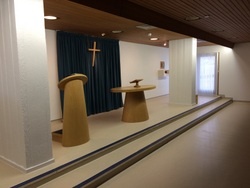
So, we encourage healthcare colleagues to provide quality spiritual care to patients, but we also recognise that they will not always have the capacity to follow through on providing for a patient’s spiritual needs. As this is our area of specialty, and what we want to devote time to, we also encourage staff to make referrals to us which allows them to focus on other aspects of a patient’s care.
While we can’t regularly cover every part of NHS Grampian, we do allocate many areas to each chaplain so that he or she can proactively make regular connections with staff and patients.
In terms of the ‘religious’ aspects of our work, in addition to regular visits, chaplains will conduct ceremonies, for example: Blessings (most often for babies), funerals, memorial services and, as the need arises, we can also organise emergency weddings.
We also can play a linking role for a patient and his/her church. Sometimes, a patient will ask us to phone their minister/pastor to let them know they are in hospital. Other times, a patient may wish to receive a visit only from a chaplain which is often the case when their home church is some distance away.
I am so thankful to say that transformation can and does often occur as the encounter develops as learning takes place both in the other as well as the chaplain. Lives are being changed on so many different levels – not just physically but mentally, socially and spiritually in the best sense of that last word as people begin to realise where their help really comes from!”
We continue to pray for Jarod and other BUS Chaplains as they serve God in these unique ministry settings.